Customer Proof
How to Ask for a Testimonial Without Making It Awkward
Most people mean to ask for testimonials. They put it off because asking feels pushy, then ask at a bad moment, in a vague way, and get a vague answer. Asking well is mostly about timing, a good question and making it easy to say yes or no.
Hearnode Team9 min read
In This Article
- Why asking for a testimonial feels awkward
- When to ask for a testimonial
- Who to ask
- How to ask for a testimonial in five steps
- A testimonial request email example
- Questions that produce useful testimonials
- What to do when they reply
- If they say no, or don’t reply
- Asking on a call, not just by email
- Make asking a routine, not a campaign
- Asking for testimonials with Hearnode
- How to ask for a testimonial: FAQs
A customer emails support to say your product saved their team hours this month. Everyone is pleased. Someone says we should get a testimonial from them, and everyone agrees. Then nobody asks, because it feels a bit awkward, and by the time someone remembers, three months have passed and the moment is gone.
That's how most testimonial collection fails: not with a refusal, but with a request never made. Learning how to ask for a testimonial is less about clever wording than about building the ask into moments when it feels natural, and making it so easy that saying yes takes a minute and saying no takes none.
Why asking for a testimonial feels awkward
It feels like asking for a favour, and in a way it is. But consider it from the customer's side. Someone who has had a genuinely good experience is often happy to say so, especially if it's easy and they're asked politely. Many are flattered to be asked. The awkwardness is mostly on the asking side, and it fades once you've done it a few times.
What does make it awkward is a bad ask: one that arrives at the wrong time, demands too much effort or feels like a sales tactic. Fix those, and most of the discomfort goes away.
When to ask for a testimonial
Timing does most of the work. The best moments are right after the customer has experienced a real result:
- After a problem they raised was solved. If they told you a change solved their problem, they're in exactly the right frame of mind.
- After they praise you unprompted, in a support conversation, a survey comment or an email.
- After a milestone, such as finishing onboarding successfully, completing a project with your product or a first renewal.
- After a measurable outcome they can describe in their own words.
And some moments to avoid:
- Right after they sign up or pay. They haven't experienced anything yet, so any testimonial would be about expectations, not results.
- During or just after a problem, even a resolved one, unless they bring it up positively themselves.
- In bulk, to everyone. A mass email asking every customer for a testimonial feels impersonal and gets mostly ignored.
Who to ask
Ask the people who've seen results, not just the people who like you. A short testimonial from someone who can describe a specific change in their work is worth more than an enthusiastic one with nothing concrete in it.
It also helps to aim for variety: different roles, company sizes and use cases. Prospects look for testimonials from people like them. A wall of quotes from founders won't reassure an operations manager, and vice versa.
Be careful with incentives. Offering a discount or gift in exchange for a positive testimonial can bias what people say, and in many places it brings disclosure obligations. If you do offer something, offer it for an honest response regardless of what it says, and be open about it. Our article on testimonial consent covers the rules in more detail.
How to ask for a testimonial in five steps
1. Make it personal and specific
Reference what actually happened: “You mentioned last week that the new reporting saved your team a few hours a month.” It shows you're paying attention, and it reminds them of the result you'd like them to describe.
2. Ask a question, not for a testimonial
“Could you write us a testimonial?” is hard to answer. People don't know what to write or how long it should be. A specific question is much easier: “What was the situation before, and what's different now?” Their answer is the testimonial.
3. Keep it short and easy
Tell them it takes a couple of minutes, and make sure it does. One or two questions, a text box and a send button. Avoid asking them to log in, create an account or fill in a long form.
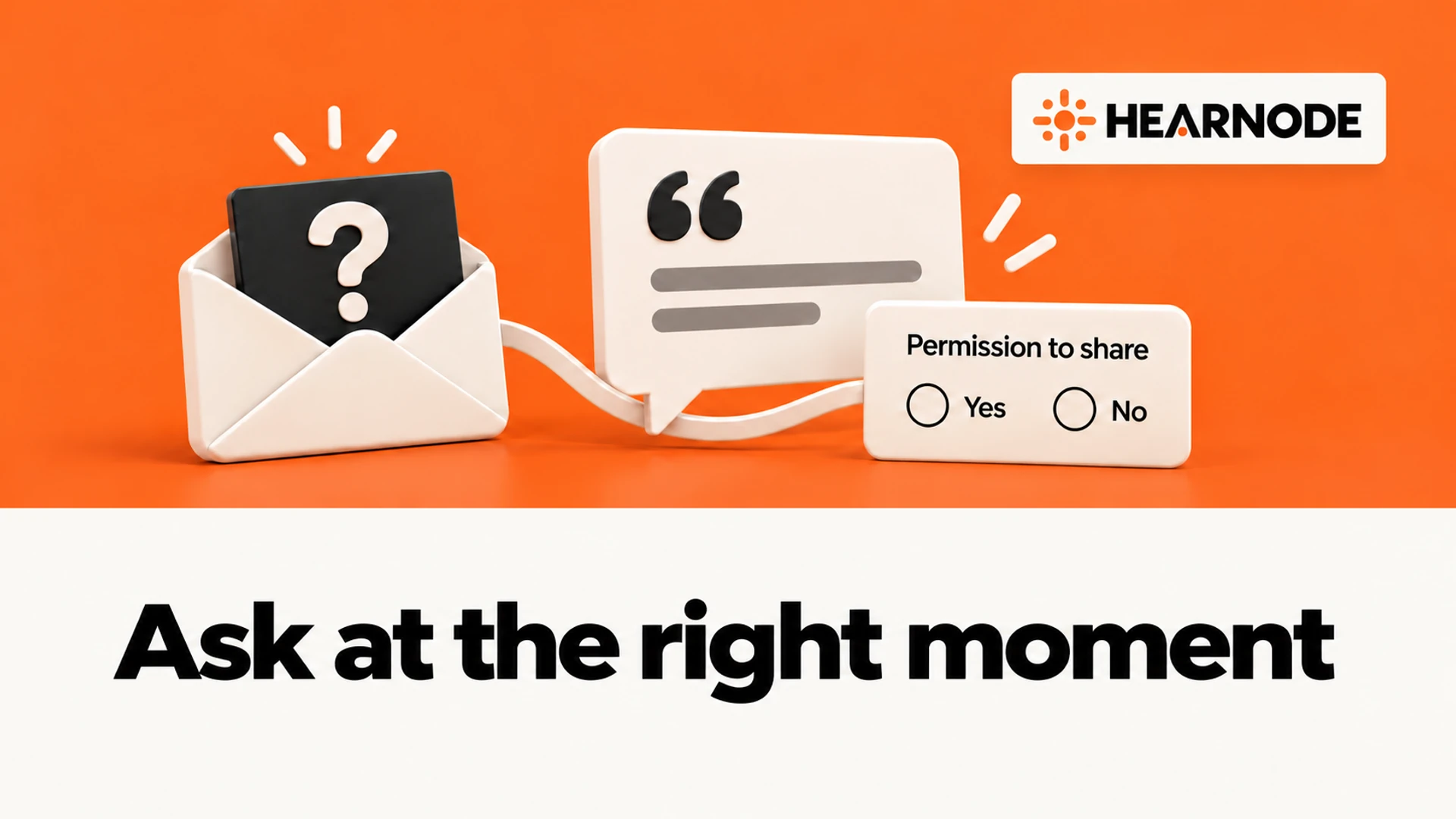
4. Ask for permission in the same step
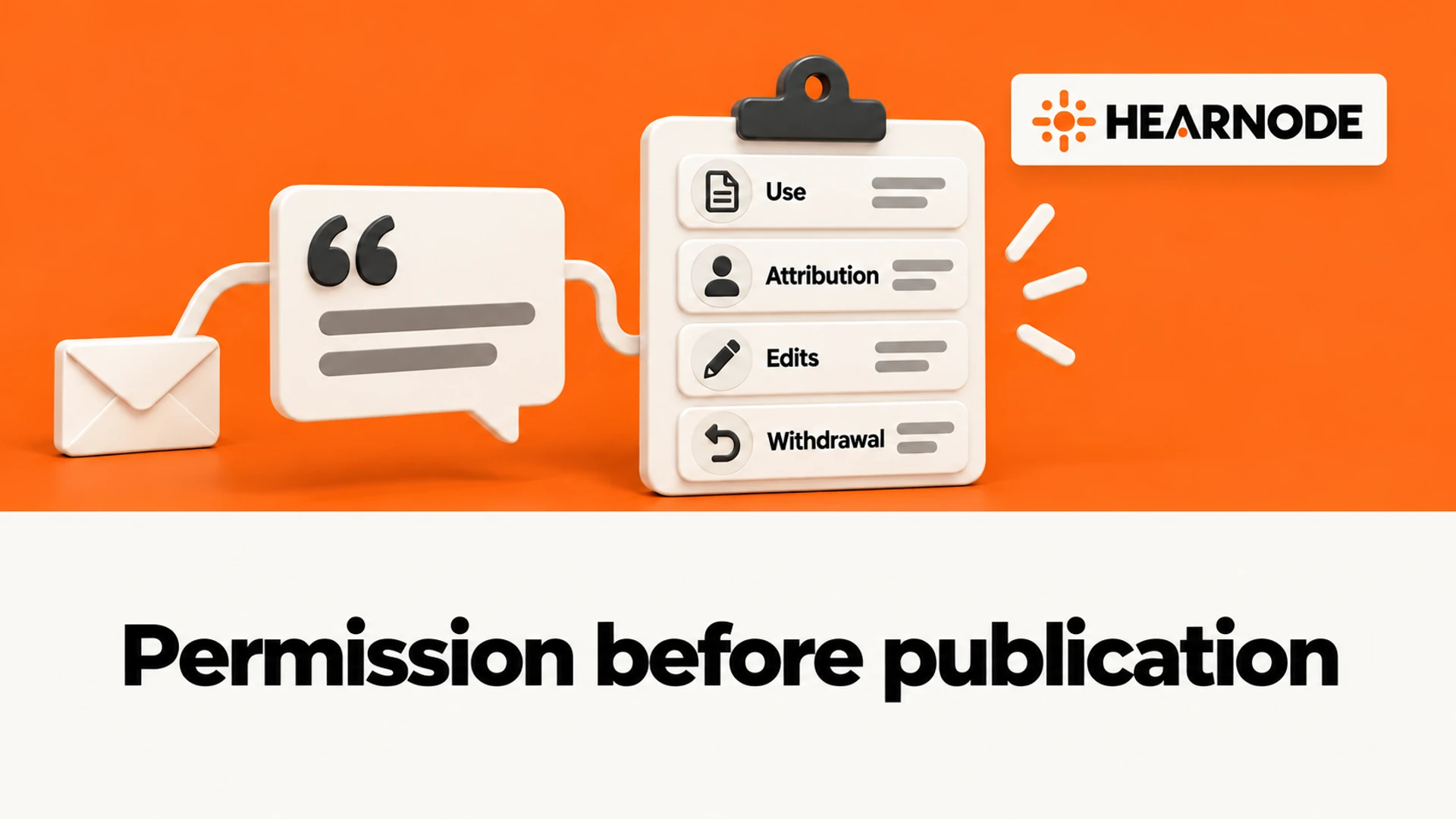
Don't collect the words now and ask permission later. Ask at the same time, clearly: where you'd like to use it, and whether that's fine. Customers who understand exactly what they're agreeing to are more comfortable saying yes, and you avoid an awkward second conversation.
5. Let them choose how they’re named
Some people are happy with their full name, role, company and photo. Others prefer first name and role only, or just the company. Offer the choice. A testimonial with modest attribution is still far better than one you never got because the customer wasn't comfortable with the defaults.
A testimonial request email example
Here's a short request that follows the steps above:
“Hi Sam, thanks again for your note last week about the new reporting. It was great to hear it's saving your team time. Would you be willing to share a couple of sentences about it that we could show on our website? The easiest way is to answer one question: what was it like before, and what's different now? It should take about two minutes. You can choose how you're named, from full name and company to just your role, and you can change your mind later. No pressure at all if you'd rather not.”
It's specific, it's short, it explains exactly what will happen, and it makes declining easy. That last part matters more than it seems. People are more willing to say yes when they clearly could say no.
Questions that produce useful testimonials
Pick one or two, not all of them:
- What was the situation before you started using [product]?
- What's different now?
- Was there a moment when you knew it was working?
- What would you tell someone in your position who was considering it?
- Is there a specific result you've noticed, such as time saved or fewer mistakes?
Questions about before-and-after produce the most persuasive testimonials, because they tell a small story, and stories are what prospects remember.
What to do when they reply
Thank them promptly and personally. If you want to use a shorter excerpt, choose words from what they actually wrote and keep the meaning intact. Don't polish their language into marketing copy; testimonials that sound like the customer are more believable than ones that sound like your website. If you shorten it, show them the version you'll publish. Keep the original too, so you can always check the excerpt against it.
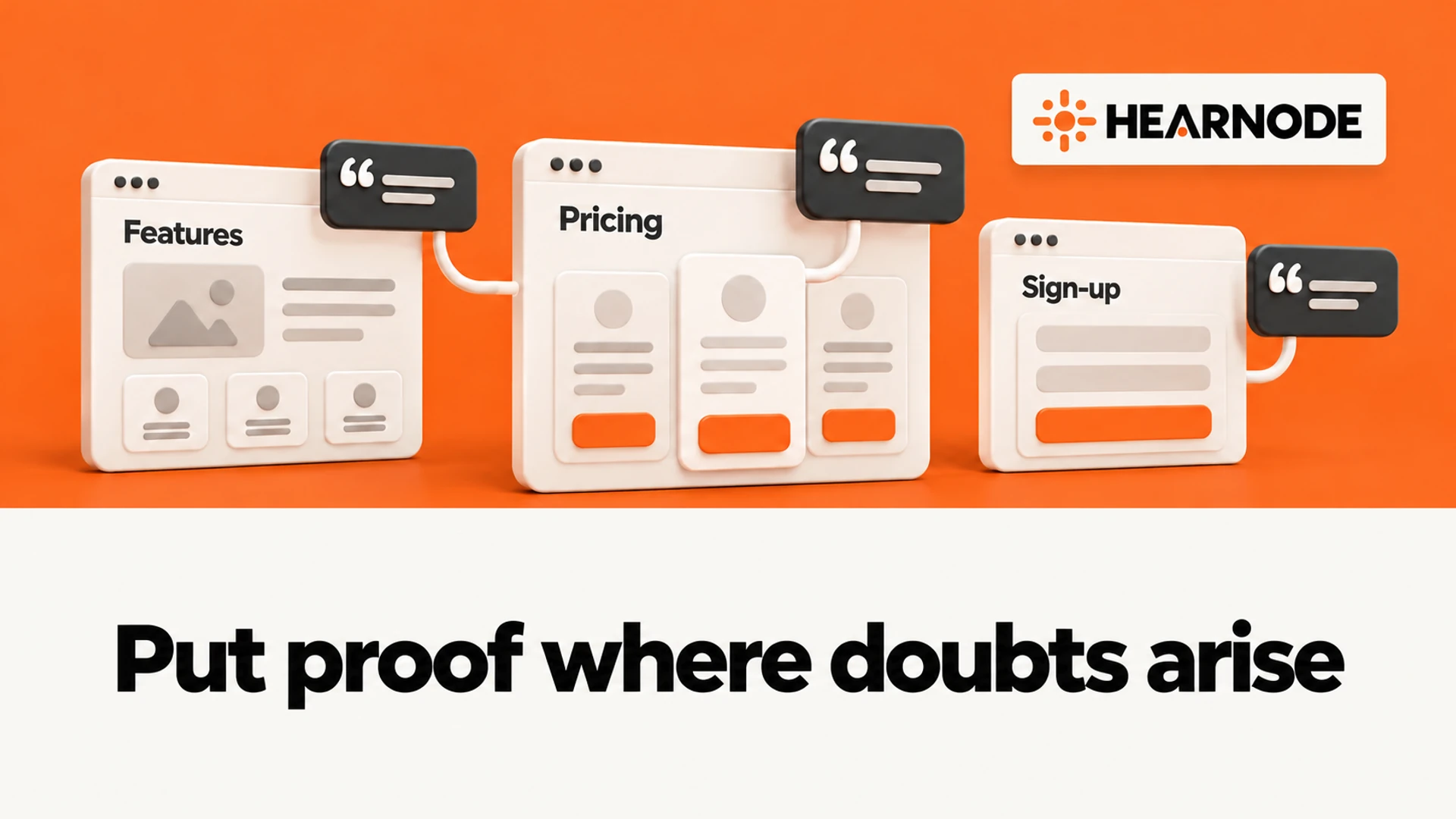
Then use it where it helps. A testimonial about reporting belongs near your reporting features, not only on a general testimonials page. Our guide on where to put testimonials on your website goes through the options page by page.
If they say no, or don’t reply
If they decline, thank them and move on. Their goodwill is worth more than one quote. If they don't reply, a single, friendly reminder a week later is fine. After that, let it go. Repeated chasing turns a pleasant request into exactly the pushiness you were trying to avoid.
Asking on a call, not just by email
Some of the best testimonials start in conversation. When a customer says something enthusiastic on a call, you can ask right then: “That's great to hear. Would you mind if we used something like that on our website? I'll send you a link so you can write it in your own words and choose how you're named.” Then send the link straight after the call, while it's fresh.
Don't transcribe what they said on the call and publish it as a quote. Spoken praise is often more casual than people would choose in writing, and they may not remember exactly what they said. Let them write it, or at least approve your written version, before it goes anywhere.
Make asking a routine, not a campaign
Testimonial “campaigns”, where a team asks everyone at once a few times a year, produce a burst of responses and long gaps in between. A routine works better: whenever one of the moments above happens, someone sends a short, personal request. Over a year, that steady trickle produces more, fresher and more varied testimonials than any campaign.
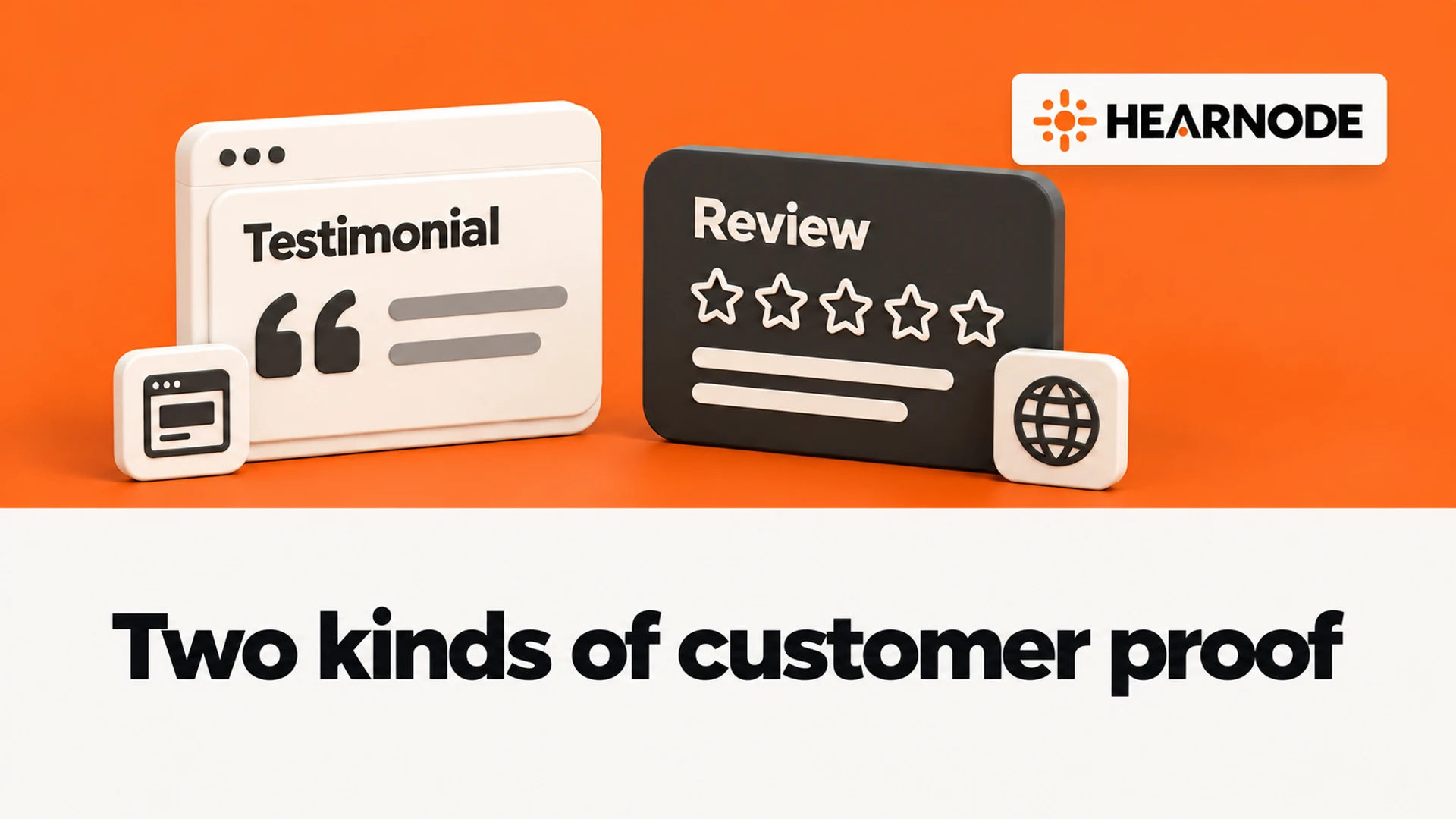
It also helps to know what you're collecting. Testimonials you gather and publish yourself work differently from independent reviews on third-party sites. Our article on testimonials vs reviews explains why it's worth having both.
Asking for testimonials with Hearnode
Hearnode's Testimonials module is designed so that asking, permission and publishing happen in one clear flow.
- Use a general collection link for anyone, or send personal invitations to specific customers.
- Customers choose their own attribution: name, role, company and photo are all optional. A company name does not grant permission to use their logo.
- The exact permission statement and use choices are stored with each testimonial, so you always know what was agreed.
- Display excerpts must come from the original text and keep its meaning, and the original is always kept.
- Customers can withdraw later, and new managed displays stop after verification.
- AI never writes testimonials. It can suggest tags or an excerpt for a person to review.
There's also a natural moment built in. When a customer answers Solved to an outcome follow-up in Customer Outcomes, you can choose to invite them to give a testimonial. The invitation is optional and neutral, and permission to publish is asked separately. The testimonials guide covers collection links, invitations and review.
The best testimonial requests barely feel like requests at all. They arrive when a customer has just seen something good happen, ask one easy question and respect whatever answer comes back. Make that a habit, and testimonials stop being something you chase and start being something that accumulates.
How to ask for a testimonial: FAQs
How do you ask a client for a testimonial?
Ask soon after they experience a real result, reference what happened, ask one specific question such as what was different before and after, explain where you would use it and let them choose how they are named. Make declining easy.
When is the best time to ask for a testimonial?
Right after a positive result: when a problem they raised is solved, when they praise you unprompted, after a milestone or after a measurable outcome. Avoid asking right after a sale or during a problem.
What should a testimonial request email say?
Keep it short and personal. Mention the specific result, ask one easy question, say how long it takes, explain where it will appear and the attribution choices, and make it clear that saying no is fine.
Can you offer an incentive for a testimonial?
Be careful. Incentives can bias testimonials and often create disclosure obligations. If you offer something, offer it for an honest response regardless of what it says, and disclose it. Never make it conditional on positive feedback.
Can you edit a customer testimonial?
You can shorten it to an excerpt, but use the customer’s own words and keep the meaning intact. Do not rewrite it into marketing language. Show them the version you plan to publish and keep the original.
Put this into practice with Hearnode
The features and guides behind this article.