Customer Research
Why Customers Churn Without Complaining First
Many customers cancel without ever filing a complaint. The warning signs were usually there, just not in the support queue. Understanding why customers churn quietly, and where those signs show up, gives you a chance to act while it still matters.
Hearnode Team9 min read
In This Article
- Why customers churn without complaining
- Voluntary and involuntary churn
- The most common reasons customers churn
- Quiet signals that come before churn
- How to act on churn signals before renewal
- Why answering feedback reduces quiet churn
- Who should own churn signals
- Asking departing customers why they are leaving
- Turning churn reasons into product decisions
- Where Hearnode helps
- Why customers churn: FAQs
The cancellation arrives on a Tuesday. No angry email, no escalation, no request for a call. Just a notice that the account won't renew. The account manager looks back through the history and finds nothing dramatic: a couple of feature requests last year, a satisfaction score that dipped slightly, a support ticket that was resolved. Nothing that looked like a customer about to leave.
This is how a lot of churn happens. Not with a complaint, but with a gradual loss of interest that never becomes loud enough to notice. Understanding why customers churn without warning starts with accepting that the warning usually was there. It was just spread across places nobody connected: a feedback board, a survey comment, a request that never got an answer.
Why customers churn without complaining
It's tempting to assume unhappy customers will say so. Many won't, for understandable reasons:
- Complaining takes effort, and leaving at renewal takes almost none.
- They don't believe it will change anything, often because earlier feedback went unanswered.
- They're not the decision-maker. The daily user is frustrated; the person who cancels never talked to you.
- They found an alternative and see no point in explaining.
- The problem isn't dramatic. A slow decline in usefulness doesn't feel like something to complain about.
The second reason deserves attention, because it's the one you can most directly influence. Customers who have seen their feedback lead to changes are far more likely to speak up before leaving. Those who haven't, don't.
Voluntary and involuntary churn
Before digging into reasons, separate two very different kinds of churn. Involuntary churn happens when a customer didn't decide to leave: a card expired, a payment failed, and nobody noticed. Voluntary churn is a deliberate decision to stop. They need different fixes. Involuntary churn is mostly a billing and communication problem. Voluntary churn is a product and relationship problem, and it's the one this article is about.
The most common reasons customers churn
They never reached the value they bought for
Some customers sign up, struggle through setup, use a fraction of the product and eventually conclude it isn't worth it. The product might have been perfect for them. They never got far enough to find out. This tends to show up early, in the first renewal.
The problem they cared about was never solved
A customer asks for something that matters to their work. It sits on a board for months. Or it ships, but in a form that doesn't quite fit how they work, and nobody asks whether it helped. Each of these leaves a small, unspoken disappointment.
Their needs changed
Businesses grow, shrink, reorganise and change direction. Sometimes a product that fit perfectly a year ago simply doesn't fit anymore. This churn is often unavoidable, but it's useful to recognise, because it isn't a sign that something is broken.
The relationship faded
The person who chose your product leaves, and their replacement never learned why it was chosen. Or nobody from your side has spoken to the account in a year. Without a relationship, renewal becomes a line item to cut.
Price stopped matching value
Price is the reason customers give most readily, partly because it's polite and easy to say. Sometimes it's true. Often it's shorthand for we don't get enough out of this to justify the cost, which leads back to the reasons above. Cutting the price rarely fixes that kind of churn for long.
Quiet signals that come before churn
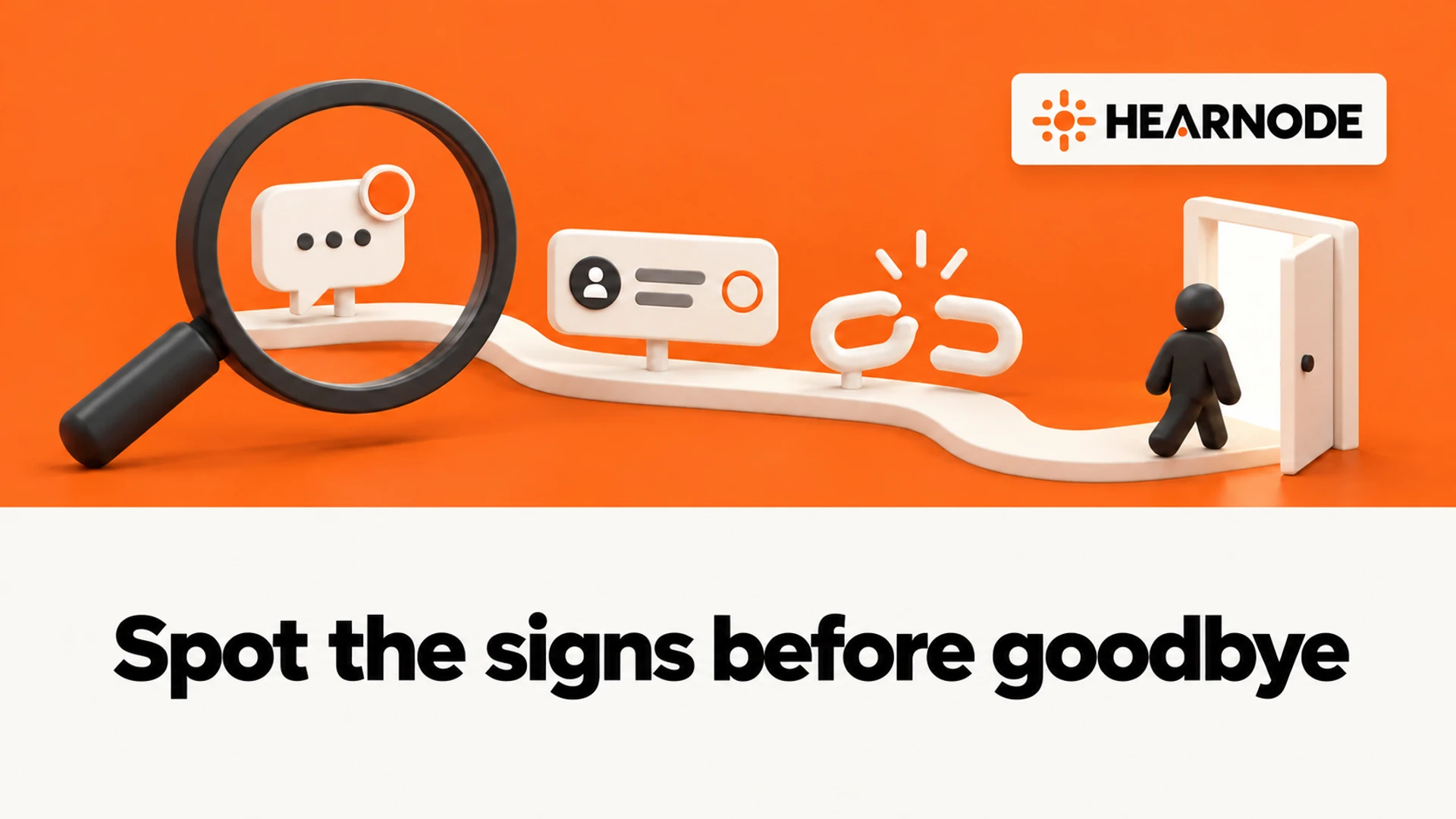
Most of these reasons leave traces long before the cancellation. The trick is knowing where to look:
| Signal | Where to find it | What it might mean |
|---|---|---|
| Requests left unanswered for months | Your feedback board | They feel unheard |
| A shipped change marked “still unresolved” | Outcome follow-ups | The fix did not fix their problem |
| Satisfaction scores drifting down | Surveys over time | The experience is wearing thin |
| Usage shrinking, or limited to one feature | Product usage | They are not getting broad value |
| The main contact leaves | Account records, bounced emails | The relationship needs rebuilding |
| Feedback suddenly stops | All channels | They may have stopped caring |
That last row is the subtle one. A customer who used to send requests and comments and has gone quiet isn't necessarily happy. Silence after engagement is often a step toward the exit. IntensePath's piece on the leading indicators of churn goes deeper into usage-based signals and the interventions that fit each one.
How to act on churn signals before renewal
Spotting signals is only useful if someone does something with them. A simple routine works for most teams:
- Review accounts approaching renewal a couple of months ahead, not the week before.
- Check their feedback history. Open requests, unanswered comments, unresolved outcomes, falling scores.
- Answer what's outstanding. Even a clear no is better than an open request they've been waiting on.
- Talk to them. A short conversation that starts with “we noticed you asked about X” lands very differently from a generic check-in.
- Follow up on unresolved problems and record what you learn, so the next review starts from there.
Why answering feedback reduces quiet churn
There's a direct link between how you handle feedback and how much of your churn arrives without warning. Every request that goes unanswered teaches a customer that speaking up doesn't help. Over time, they stop speaking up, and that's precisely when you lose the early signals. Customers who see their feedback answered, even with a no, keep talking to you, which means you hear about problems while there's still time to fix them.
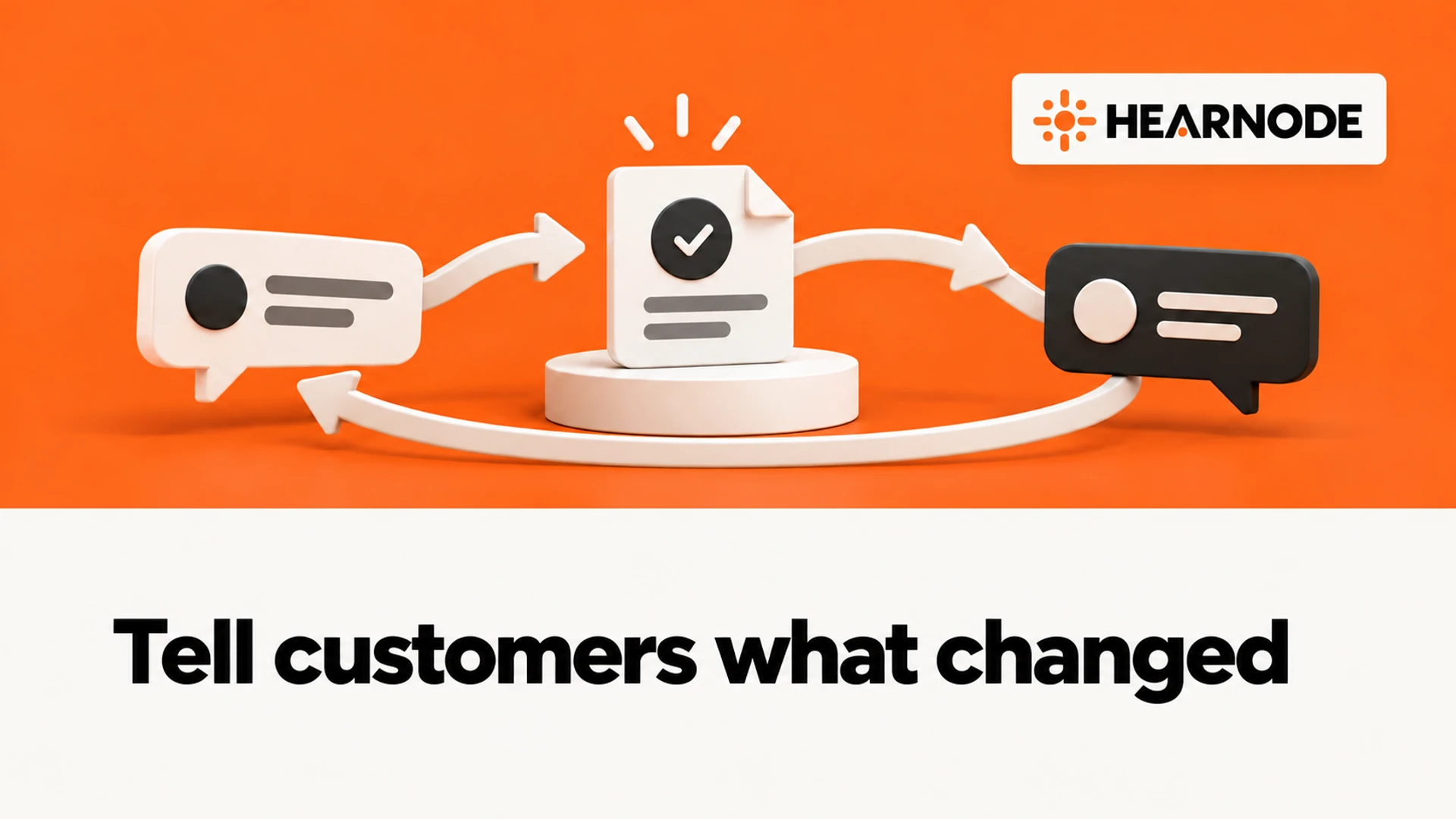
Two habits matter most. The first is telling people what happened to their requests, which we cover in how to close the feedback loop. The second is checking, after you ship something, whether it actually solved the problem for the people who asked. A release that misses the mark is invisible unless you ask, and it's one of the most common sources of quiet disappointment. Our guide to post-launch feedback explains how to ask.
Who should own churn signals
Churn signals are scattered across teams: product sees requests, support sees tickets, success sees accounts, and whoever runs surveys sees scores. If each team only watches its own slice, the full picture never comes together. Someone needs to look across all of them for the accounts that matter most, usually a customer success lead or, in smaller companies, a founder.
That person doesn't need special tools to start. A shared view of each renewing account's open requests, recent survey comments and unresolved outcomes, reviewed monthly, catches most of what would otherwise be missed. Survey comments from detractors deserve a particular look. Our article on NPS survey questions covers how to ask for them in a way that produces useful answers.
Asking departing customers why they are leaving
When a customer does cancel, ask, but ask well. A short question at the point of cancellation, with a handful of clear options and space for a sentence, gets more honest answers than a long exit survey. Useful options usually include: didn't use it enough, missing something we needed, too expensive for what we used, switched to something else, our needs changed and other.
Don't argue with the answer, and don't make cancelling harder to collect it. People who feel trapped give hostile or random responses, and they remember the experience. If someone is willing to talk, a short conversation a week or two after they leave can be surprisingly candid. They no longer have a reason to be polite.
Turning churn reasons into product decisions
Individual exit answers are anecdotes. Grouped over a few months, they become a clear picture. If missing something we needed keeps coming up, find out what that something is and treat it as a feature request with real weight behind it. Our guide on how to prioritize feature requests explains how to factor that in. If didn't use it enough dominates, the problem is probably onboarding or value, not features.
Be careful about reacting to a single loud churn. A large account leaving over one missing feature is painful, but building it for the next customer who might have the same need is a different decision from building it because one customer left.
Where Hearnode helps
Hearnode doesn't predict churn, and we'd be wary of any tool that claims to do it from feedback alone. What it does is keep the quiet signals in one place, attached to the customers they came from.
- On feedback boards, each request shows which accounts asked and how long it has waited, so unanswered requests from important customers are easy to find.
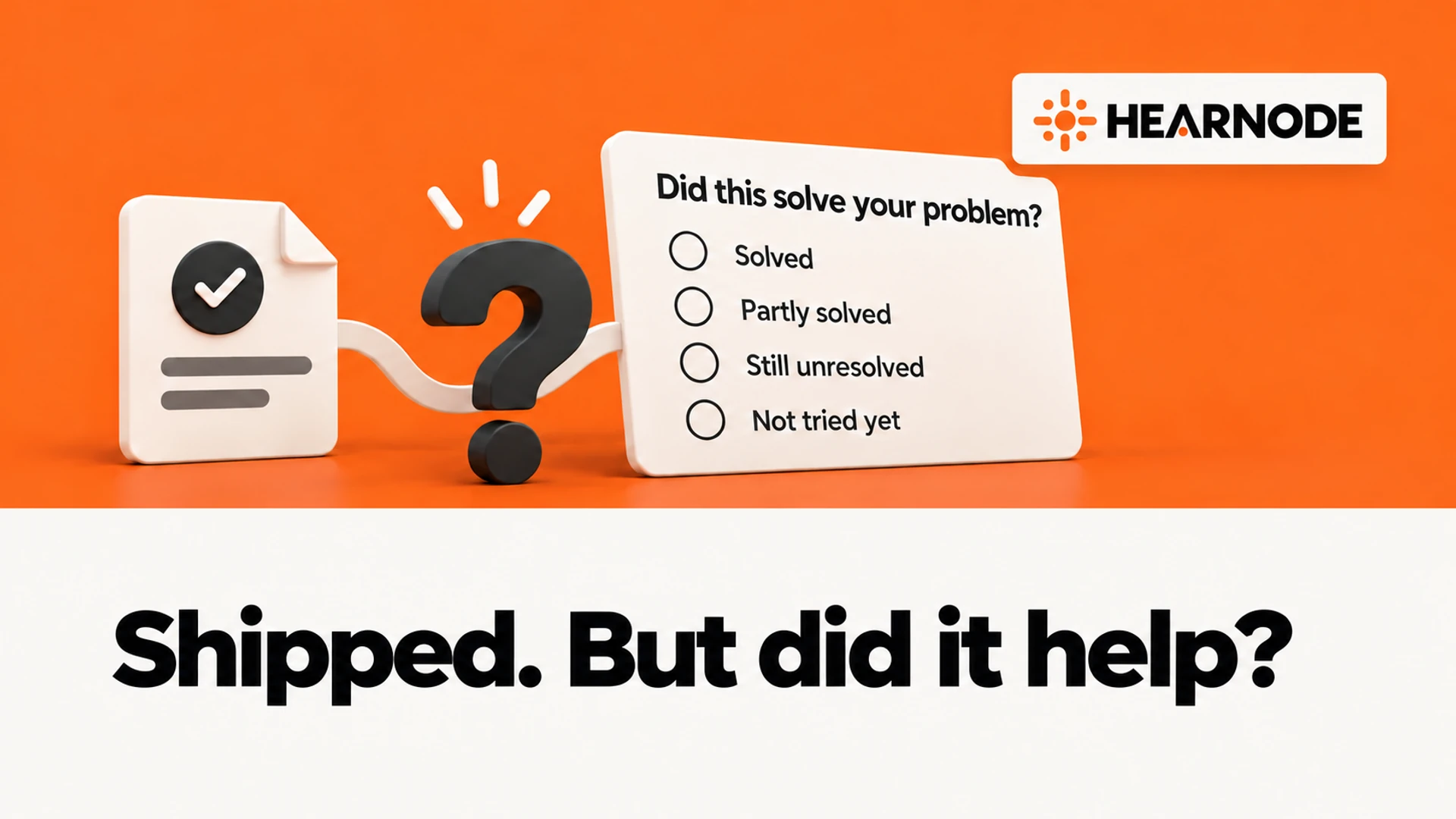
- Customer Outcomes asks the people behind a shipped request whether it solved their problem. A Still unresolved or Partly solved answer, with its private explanation, is exactly the kind of early signal this article is about.
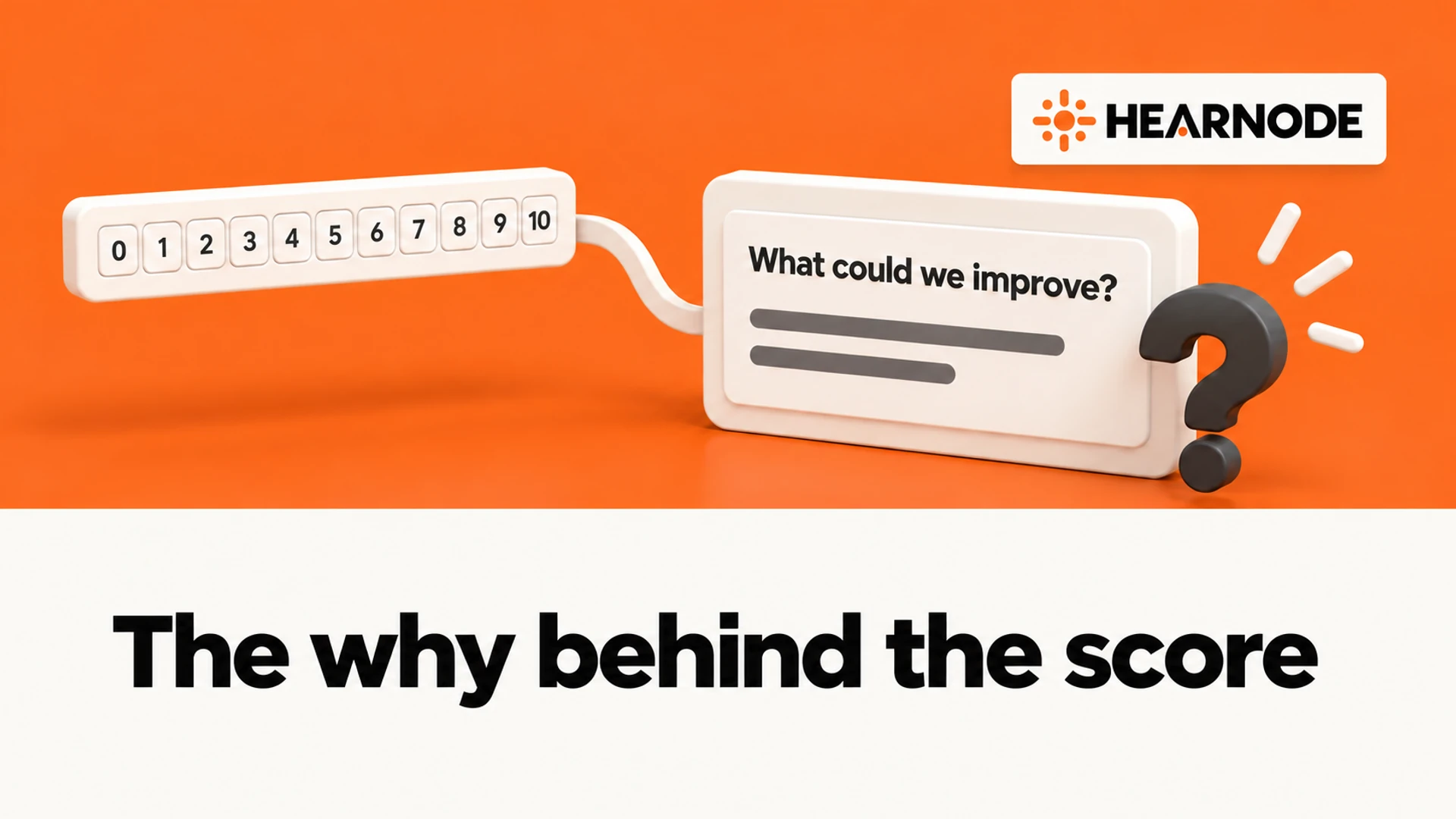
- Surveys track satisfaction and recommendation over time, with denominators visible, so a slow decline is easier to see than to miss.
- A partial or unresolved outcome can become linked follow-up work, so the next step is recorded rather than remembered.
The surveys and outcomes guide explains how to set these up for your first Brand.
Churn feels sudden when you only look at the cancellation. Looked at from the other end, from the first unanswered request, it's usually slow and readable. The teams that keep customers longest aren't necessarily the ones with the most features. They're the ones who notice early, reply honestly and check whether what they shipped actually helped.
Why customers churn: FAQs
Why do customers churn?
Common reasons include never reaching the value they bought for, a problem they cared about going unsolved, changing needs, a fading relationship after a key contact leaves and price no longer matching the value they get. Many customers leave without complaining first.
What are the early warning signs of customer churn?
Look for feature requests left unanswered for months, shipped changes that did not solve the customer’s problem, satisfaction scores drifting down, shrinking usage, a main contact leaving and feedback that suddenly stops.
What is the difference between voluntary and involuntary churn?
Voluntary churn is a deliberate decision to stop using a product. Involuntary churn happens without a decision, usually because a payment failed or a card expired. They need different fixes: product and relationship work for the first, billing and communication for the second.
How do you find out why customers churn?
Ask a short question at cancellation with a few clear options and space to explain, group the answers over time and, where possible, have a brief conversation with departing customers. Combine this with their earlier feedback history.
Can customer feedback reduce churn?
It can help, mainly by surfacing problems early and by showing customers they are heard. Replying to requests, closing them with an answer and checking whether shipped changes helped all reduce the quiet disappointment that often comes before churn.
Put this into practice with Hearnode
The features and guides behind this article.